


Beaches
Review of Coastal Defence Strategy
16 June 2026
dlr County
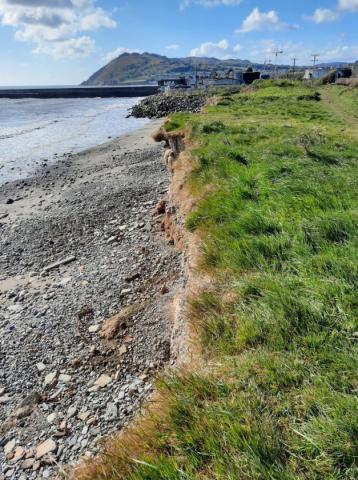
Dún Laoghaire-Rathdown County Council (dlr) has completed a review of its Coastal Defence Strategy*. The review confirms that the overall findings of the original strategy remain broadly valid, while updating key information to reflect works carried out, additional data, and evolving coastal conditions.
The original strategy set out to:
- Identify coastal defences, habitats, natural features, landscape, and amenity considerations
- Assess risks to people, property, and the natural environment from coastal erosion, cliff instability, and wave action
- Determine appropriate options and policies for each discrete stretch of coastline that are technically, environmentally, and economically sound
- Recommend the extent and type of future coastal defences
- Provide a prioritised programme of works
The current review was undertaken to ensure the continued accuracy and relevance of the original strategy. Specifically, it aimed to:
- Update the information forming the basis of the original strategy to establish if the findings remain broadly accurate
- Refresh the prioritised programme of works, taking into account projects completed and changes that have occurred since the first review.
Since the original study, a number of major and minor coastal defence projects have been completed, alongside ongoing monitoring of key sites. These projects include
- Seapoint Beach access phase 1& 2
- Kavanaghs Water access
- Sandymount Avenue East rock armour and masonry repair
- Forty Foot water access
- Coliemore Harbour rock anchors
- Corbawn Lane Beach access
- Quinns Road Beach access
- Woodbrook Historical Landfill
The current review assessed potential changes at these locations arising from factors such as completed works, additional data collection, and updated erosion rates.
In comparing the two studies:
- The overall conclusions are broadly aligned, with some reclassification of risk levels at specific sites
- No new sites, works, or interventions have been introduced
- A limited number of areas requiring short-term coastal protection were identified—most of which have already been addressed or are currently in progress as of Q2 2026
- Other areas will continue to be monitored for erosion, cliff failures, and damage from wave action on existing defences
The 2025 review is informed by a range of updated data sources and policy inputs, including:
- National Coastal Extreme Water Level Estimation Points (from The Irish Coastal Wave and Water Level Modelling Study ICWWS 2018 – Phase 1)
- Developments in Government and national coastal change policy
- Data gathered since the 2010 strategy
- Walkover studies conducted in 2022 and 2025, along with records of works completed since 2010
- Approaches adopted by other local authorities and counties
Coastal Change Management: A Practical Resource
In addition to the Coastal Defence Strategy review, the Climate Action Regional Offices (CARO) has created a document titled, “Coastal Change Management: A Practical Resource”. This documents is designed as a practical guide to help people understand the key issues involved in managing coastal change.
The have produced a practical guide to support local authority staff working in coastal change management. It also provides useful information for residents and community groups. See extract from their website;
"Coastal Change Management: A Practical Resource” has been prepared by the Climate Action Regional Offices. This document is intended as a practical resource for local authority staff working in the area of coastal change management.
Coastal change management is an evolving area in the context of the implementation of the Report of the Inter-Departmental Group on National Coastal Change Management Strategy (2023) and recent legislative reform in the area of Planning including Marine Area Planning. This document is intended as a signpost to the issues to be considered in the area of coastal change management. Arup were contracted by CARO to draft the document with the support and guidance of a Steering Group comprising senior staff from DHLGH, OPW, MARA, NPWS, OPR, Heritage Council and local authorities. The report benefits from the provision of case studies and input from local authorities and other stakeholders. You are encouraged to circulate this report internally within your local authority to staff dealing with coastal change management including coastal teams, planners, engineers, biodiversity officers, climate teams, etc. Click here for full report.
* The Coastal Defence strategy was originally developed between 2008 and 2010, with this review undertaken in 2025 to update its findings based on the latest data and completed works.
Share
Facebook
News
View all
Local Business

300 women in business celebrate 20 years of National Women�...
Fri, 16 Oct 2026 12:00
dlr County
Traffic Management

Traffic and Roadworks Update: 17 to 23 October 2026
Fri, 16 Oct 2026 12:00
dlr County
Current Exhibition
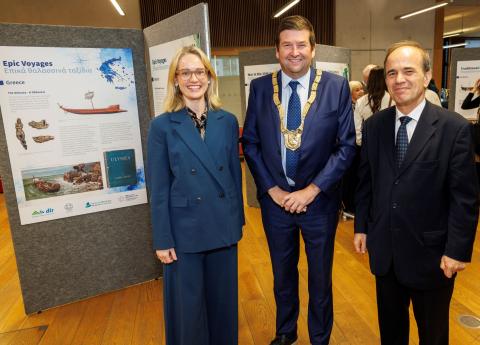
New Exhibition Celebrates 10,000 Years of Greek and Irish Ma...
Fri, 16 Oct 2026 12:00
dlr Lexicon